



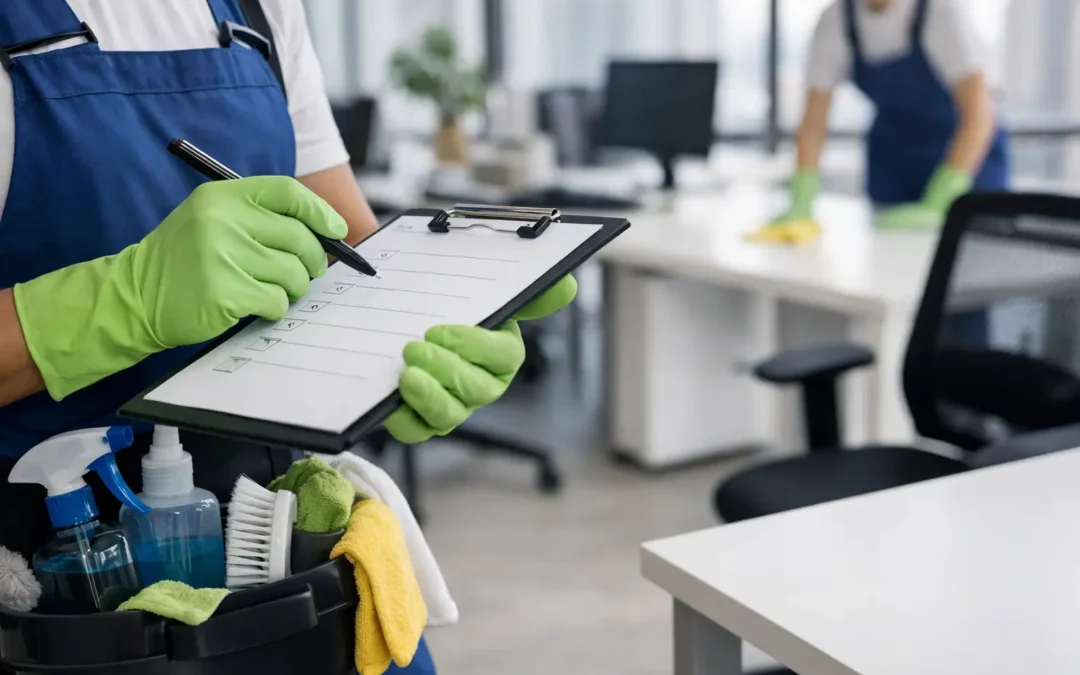
If your office only gets attention when the bins overflow or the kitchen starts smelling off, standards slip fast. The best office cleaning checklist fixes that by turning cleaning from a reactive task into a clear routine that protects presentation, hygiene and day-to-day operations.
For office managers, property managers and business owners, the issue is rarely whether cleaning matters. It is whether the checklist actually reflects how the space is used. A quiet professional suite, a busy open-plan office and a mixed commercial site with shared amenities all need different levels of attention. A good checklist is practical, site-specific and easy for staff or cleaners to follow without guesswork.
What makes the best office cleaning checklist
The best office cleaning checklist is not the longest one. It is the one that covers high-traffic areas, hygiene risks and presentation standards at the right frequency. When a checklist is too broad, things get ticked off without being done properly. When it is too vague, standards vary from one clean to the next.
A workable checklist should separate tasks by daily, weekly and monthly frequency. That keeps urgent hygiene items from being buried under occasional jobs like skirting boards, vents or internal glass. It should also account for your office layout, headcount, shared facilities and any client-facing spaces where presentation matters more.
There is also a trade-off between in-house and professional cleaning. Internal teams can handle basic upkeep, but they are rarely equipped for deeper sanitation, detailed washroom cleaning or consistent after-hours service. If your office has high staff numbers, frequent visitors or strict building expectations, a more structured commercial cleaning plan usually makes better operational sense.
Daily office cleaning checklist
Daily tasks carry the most weight because they deal with hygiene, odours and visible mess. If these are missed, the whole office feels neglected, even if a deeper clean happens later in the week.
Reception and entry areas
Reception sets the tone for the business, so floors, glass and touchpoints need regular attention. Hard floors should be vacuumed or mopped as needed, entry mats shaken out or vacuumed, and fingerprints removed from doors, glass panels and counters. Dust on front desks, ledges and display areas should also be cleared daily.
In wet weather, Sydney entrances need extra monitoring. Mud, water marks and debris get tracked in quickly, which is both a presentation issue and a slip risk.
Workstations and shared office areas
Desks may be partly managed by staff, but common surfaces should still be included in the checklist. Wipe high-touch points such as mobiles, keyboards if agreed, desk edges, chair arms, meeting tables, door handles, light switches and shared equipment. Empty rubbish and recycling bins, replace liners where needed and vacuum carpeted walkways and under obvious debris zones.
Not every desk needs a full detail clean each day. In many offices, a better approach is daily touchpoint sanitising and waste removal, with more detailed workstation cleaning scheduled weekly.
Kitchens and breakout spaces
Office kitchens can become the most complained-about area in the building. Benchtops, sink areas, taps, cupboard handles, appliance fronts, tables and chair backs should be cleaned daily. Bins need emptying, floors need mopping and food residue should never be left overnight.
If the office has a high-use kitchen, add spot checks for the microwave, fridge handles and splashbacks. These surfaces collect grime quickly and can make the whole space feel poorly maintained.
Bathrooms
Bathrooms are non-negotiable on a daily checklist. Toilets, urinals, basins, mirrors, taps, dispensers, partitions and touchpoints should be cleaned and sanitised thoroughly. Replenish toilet paper, hand soap, paper towels and sanitary bins if applicable. Floors should be mopped with suitable disinfectant, with attention to corners and around fixtures.
A checklist here should focus on outcomes, not just activity. A bathroom can be technically cleaned but still fail on odour, streaks or stock levels. That is where clear standards matter.
Weekly tasks that lift the standard
Weekly cleaning fills the gap between basic upkeep and deeper maintenance. These jobs improve appearance, reduce build-up and keep daily cleaning from becoming harder than it needs to be.
Detailed dusting and surface care
Dust should be removed from skirting boards, window sills, shelves, ledges, filing cabinets, door frames and low-reach vents. Meeting rooms deserve extra attention, especially where clients attend in person. Smudges on internal glass, dust on screens and marks on tables are easy to notice.
This is also the right time to wipe down partitions, spot clean walls and remove marks from switch plates and doors.
Floor care beyond the obvious
Vacuuming visible traffic lanes each day is one thing. A weekly checklist should go further by vacuuming edges, corners, under movable furniture and less-used rooms. Hard floors may need a more thorough scrub depending on finish and traffic levels.
If your site includes lift lobbies, stairwells or shared tenancy areas, include them clearly. These spaces are often missed when responsibilities are assumed rather than assigned.
Kitchen appliances and washroom detailing
Weekly office cleaning should include inside microwave cleaning, external fridge cleaning, sink polishing and a more detailed wipe of cupboards and tiled surfaces. In bathrooms, this is the time for a more thorough clean of grout lines, partitions, lower wall areas and fixture bases where grime builds up gradually.
Monthly and periodic cleaning tasks
A strong checklist also includes less frequent jobs that protect the overall condition of the office. These are the tasks that stop a space from looking tired over time.
Deep cleaning items
Monthly tasks often include high dusting, air vent cleaning, internal window cleaning, deeper carpet treatment in problem areas, detailed upholstery vacuuming and cleaning behind or beneath movable furniture. If your office has fabric partitions or soft seating, these should be inspected and cleaned to prevent stains and odours from setting in.
In some offices, monthly is enough. In others, especially those with high foot traffic or food-heavy breakout spaces, fortnightly deep cleaning may be more realistic.
Consumables, stock and hygiene checks
A checklist should not stop at surfaces. Review washroom and kitchen consumable levels, bin liner supply, cleaning product storage and any recurring hygiene complaints. If the same issue keeps returning, such as odours, overflowing bins or dirty floors near entry points, the schedule probably needs adjusting rather than stricter supervision.
How to tailor the checklist to your office
There is no single version of the best office cleaning checklist that suits every site. A small professional office with ten staff may only need light daily cleaning and one deeper service each week. A larger tenancy with heavy kitchen use, shared amenities and frequent visitors will need more touchpoints, more consumable checks and stronger bathroom scheduling.
Start with traffic. Identify which spaces are used constantly, which are client-facing and which create the most complaints when missed. Then match the checklist to risk and visibility. Bathrooms, kitchens, reception and shared touchpoints should always rank ahead of occasional-use rooms.
You also need to factor in timing. During business hours, cleaners may not be able to vacuum meeting rooms, wipe desks or access secure spaces without disruption. After-hours service often gives better results, but it depends on access, alarm procedures and building rules.
Signs your current checklist is not working
A checklist can look fine on paper and still fail in practice. If standards vary between visits, if complaints keep surfacing, or if staff are handling cleaning jobs that should already be covered, the system needs work.
The usual warning signs are obvious. Bathrooms run out of supplies. Kitchens are wiped but still greasy. Dust builds up on edges and ledges. Bins are emptied, yet liners are missing or floors around them are dirty. These are not one-off oversights. They usually point to unclear scope, poor frequency planning or rushed service delivery.
This is where experienced commercial cleaners make a difference. A professional team should not just follow instructions. They should help refine them based on site use, problem areas and practical cleaning standards. That is the difference between a checklist that gets filed away and one that keeps the workplace genuinely clean.
A simple office cleaning checklist framework
If you are reviewing your own scope, keep it straightforward. Daily tasks should cover reception, bins, touchpoints, kitchens, bathrooms and visible floor cleaning. Weekly tasks should cover detailed dusting, internal glass, under-furniture vacuuming and appliance or washroom detailing. Monthly tasks should cover high dusting, vents, deeper carpet or upholstery attention and less accessible areas.
For many Sydney businesses, the best result comes from combining a clear checklist with a reliable cleaning partner who can adapt service frequency as your office changes. That could mean scaling up during flu season, adding kitchen attention after a team expansion, or increasing common area cleaning in multi-tenant buildings.
A clean office should never be left to chance. When the checklist is clear, the schedule is realistic and the standard is consistent, the workplace runs better and presents better without creating extra work for your team. If your current routine still depends on reminders, complaints or last-minute tidy-ups, it is probably time to tighten the process and raise the standard.