



When an office tenancy ends, cleaning is rarely a small job. An Office end of lease clean needs to do more than make the space look tidy – it has to meet handover standards, satisfy lease obligations, and help avoid delays, disputes, or added costs.
For office managers, tenants, and property professionals, the pressure usually comes at the worst time. Furniture is being moved, IT equipment is disconnected, rubbish is piling up, and the handover date is fixed. A basic tidy-up is not enough. What matters is a thorough clean that brings the premises back to an acceptable condition for inspection.
What an office end of lease clean should cover
A proper office end of lease clean is more detailed than routine office cleaning. Regular maintenance keeps a workplace presentable during day-to-day use. End of lease cleaning is about restoring the space after months or years of occupancy.
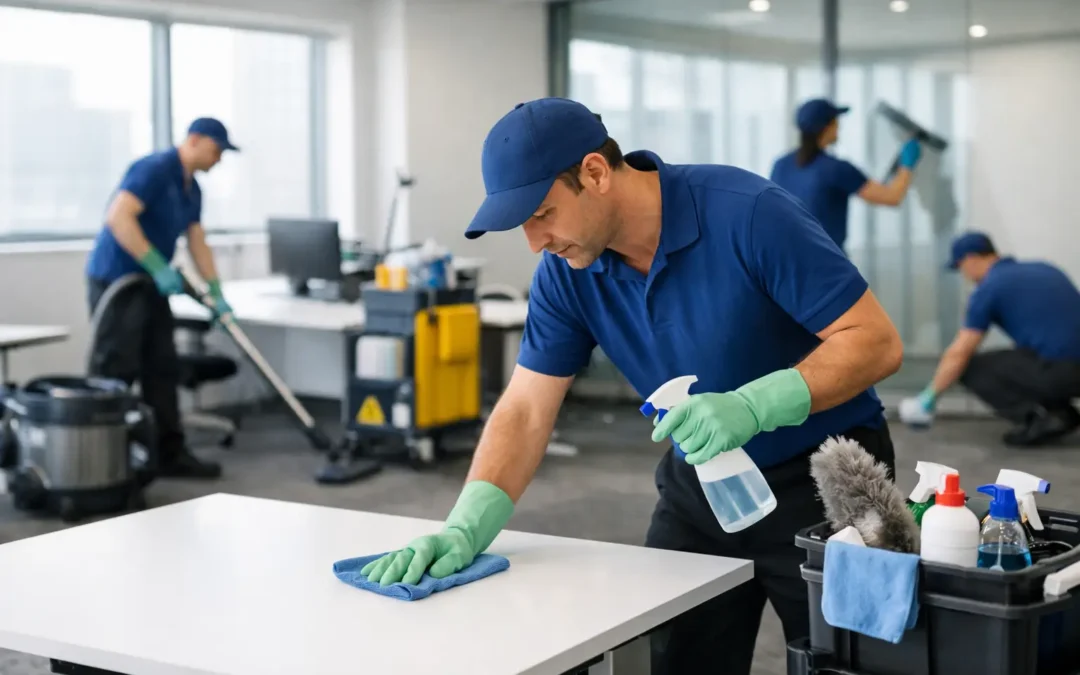
That usually means attention to carpets, hard floors, kitchens, toilets, internal glass, partitions, workstations, skirting boards, doors, light switches, and high-touch surfaces. Dust on ledges, marks on walls, built-up grime in amenities, and stains in common areas all stand out during a final inspection.
In many offices, cleaning also needs to account for reception areas, meeting rooms, breakout spaces, and storage zones that have been overlooked during general cleaning. If the site includes rubbish left behind after the move, removal may also need to be arranged as part of the job.
Why routine cleaning is not enough
This is where many tenants get caught out. A site that looked clean enough during occupancy can fail handover expectations once desks, shelving, and equipment are removed. Hidden dust, carpet wear patterns, adhesive residue, and marks around previously covered areas become obvious fast.
Property managers and landlords are not assessing whether the office looks decent at a glance. They are assessing whether the premises have been returned in a condition that aligns with the lease. That can include a deeper level of detail, especially in kitchens, bathrooms, flooring, and entry points.
It also depends on the tenancy. A small professional suite has different cleaning demands from a large open-plan office, a medical tenancy, or a commercial fitout space. The right scope should reflect the property type, site condition, and the expected inspection standard.
Common problem areas during handover
Most office handover issues come down to a few repeat problem areas. Carpets are a major one, especially where there are coffee stains, heavy foot traffic, or dirt tracked in near entrances. Glass is another, particularly internal partitions and doors that show fingerprints, smears, and dust once the light hits them.
Amenities often need more work than expected. Toilets, sinks, tiled areas, grout lines, and kitchenette surfaces can hold built-up residue that general cleaning has not fully removed. Dust on air vents, power points, window sills, and skirting boards is another common inspection failure.
Then there is waste. Once an office is vacated, leftover packaging, broken furniture, loose fittings, and general rubbish can turn a straightforward clean into a more complex clearance job. If that is not planned early, it can affect timelines and cost.
Timing matters more than most people think
The best results usually come when cleaning is scheduled after the office is fully vacated but before the final inspection. Cleaning too early creates risk. Trades, movers, or staff can walk through the site again and undo the work. Cleaning too late can leave no time to fix issues if the agent or landlord requests further attention.
For larger sites, a staged approach can work better. That may include rubbish removal first, followed by detailed cleaning once the space is clear. In some cases, carpet cleaning or specialised floor treatment may also need to be booked as part of the same handover plan.
This is one reason experienced commercial cleaners matter. They understand how to coordinate around access times, lifts, loading docks, building rules, and tight deadlines without creating extra disruption.
Choosing the right provider for an Office end of lease clean
Not every cleaning company is equipped for commercial handovers. An Office end of lease clean should be handled by a team that understands commercial sites, inspection pressure, and the difference between a quick clean and a proper exit clean.
Look for a provider with experience across office cleaning, end of lease cleaning, carpet cleaning, and rubbish removal. That broader capability makes the process easier, especially if the site needs more than one service to be ready for handover. It also reduces the risk of dealing with multiple contractors at the last minute.
In Sydney, many businesses want a cleaning partner that can respond quickly, work flexibly, and deliver a clear scope before the job starts. That matters because handover jobs often involve time-sensitive decisions, after-hours access, and a need for reliable communication.
A company such as 5 Star Cleaning Group is built around those practical requirements – trained cleaners, commercial experience, flexible scheduling, and results-focused service that helps clients hand properties back with confidence.
What to confirm before booking
Before the job is locked in, confirm exactly what is included. Ask whether carpet cleaning, internal windows, wall spot cleaning, kitchen and bathroom detailing, and rubbish removal are part of the scope. If the building has specific access conditions or a strict handover deadline, make that clear upfront.
It also helps to share the size of the office, photos if available, and any known problem areas. A precise quote and scope reduce surprises later and make it easier to get the site cleaned correctly the first time.
A good office handover clean is not just about presentation. It is about protecting time, reducing stress, and giving landlords or property managers fewer reasons to raise issues once the keys are returned.