



A carpet can look acceptable from across the office while holding weeks of tracked-in grit, coffee residue and allergens close to the pile. The question of when should office carpets be cleaned is not just about appearance. It affects workplace presentation, indoor air quality, carpet lifespan and the impression your business makes on staff, visitors and clients.
For most Sydney workplaces, carpet care needs to be planned in layers: regular vacuuming, fast spot treatment and scheduled professional deep cleaning. Waiting until the carpet looks visibly dirty usually means soil has already worked its way into the fibres, making restoration more difficult and more expensive.
When should office carpets be cleaned?
As a practical benchmark, offices should be vacuumed at least two to five times a week, depending on foot traffic, and receive professional carpet cleaning every 6 to 12 months. Busy areas may need attention more often.
A small office with a handful of staff, a no-shoes policy and limited visitor traffic may be well served by an annual deep clean. A larger office with street-facing entry points, shared meeting rooms, kitchen facilities and daily client appointments will often benefit from professional cleaning every three to six months.
The right frequency depends on how the space is used, not simply its square metreage. A quiet executive suite can stay presentable longer than a compact reception area that sees dozens of people walk in from wet Sydney footpaths every day.
Use foot traffic as the main guide
Entryways, reception areas, corridors, lift lobbies, break rooms and the paths between desks collect the most soil. These areas should be vacuumed frequently and assessed for professional cleaning well before the rest of the office.
Soil is abrasive. Each step can grind fine grit deeper into carpet fibres, dulling the colour and flattening the pile over time. Regular cleaning removes that material before it causes permanent wear, which is particularly valuable in leased premises where carpet condition can affect make-good obligations.
Clean sooner after wet weather
Sydney’s wet periods bring moisture, mud and debris indoors. Carpet near entrances can become stained quickly, while damp fibres may develop unpleasant odours if spills and tracked-in water are not addressed promptly.
Place quality entry mats at every access point, clean them regularly and arrange a spot clean or targeted carpet service after prolonged wet weather if the affected areas are showing marks. This is often more cost-effective than allowing stains to spread and booking a full restoration later.
Signs your office carpet is overdue for a deep clean
Visible stains are an obvious reason to call a professional, but they are not the only sign. Carpet can be heavily soiled before it looks dramatically different, especially in darker commercial colours.
Pay attention to these four warning signs:
- Walkways are darker, flatter or rougher than the carpet beneath desks and around the edges of rooms.
- The office has a stale smell that returns soon after routine cleaning or air freshener use.
- Staff report more dust, sneezing or allergy irritation in carpeted areas.
- Spills, food marks or old coffee stains are becoming harder to remove with normal spot treatment.
If these issues are appearing, professional extraction cleaning is usually the right next step. It removes embedded soil and residues that daily vacuuming cannot reach. It also helps reset the carpet’s appearance before traffic lanes become permanently worn.
Match the cleaning schedule to your workplace
There is no single timetable that suits every business. A sensible programme takes account of occupancy, layout, customer traffic and the type of work carried out on site.
Low-traffic offices
Small professional offices, private consultancies and back-office spaces with low visitor numbers generally need a professional clean every 9 to 12 months. Vacuuming two or three times a week, along with immediate stain treatment, is usually enough to maintain a clean standard between services.
Even in low-traffic spaces, do not overlook meeting rooms and kitchen-adjacent areas. A carpet may be clean overall but still need targeted treatment where food, drinks or frequent gatherings create isolated staining.
Standard commercial offices
Most offices with regular staff movement, client meetings and shared facilities should arrange professional carpet cleaning every six months. High-use zones can be cleaned more frequently as part of a targeted maintenance visit.
This approach keeps the workplace looking consistently professional without creating unnecessary disruption. It is also a practical choice for property managers responsible for maintaining presentation across multi-tenancy commercial buildings.
High-traffic, public-facing premises
Reception-heavy offices, medical and allied health practices, retail-adjacent workplaces, education sites and customer service centres may require professional carpet cleaning every three to four months. Daily vacuuming and rapid spill response are essential in these environments.
Public-facing carpets are part of the customer experience. A marked entrance or an unpleasant smell can undermine an otherwise well-run business within seconds. More frequent maintenance protects the carpet and helps your front-of-house areas reflect the standards your team works to.
Daily cleaning does not replace professional extraction
Vacuuming is essential because it removes loose dirt before it settles deeper into the carpet. However, it cannot remove oily residue, sticky drink spills, embedded fine dust or the particles held beneath the surface of the pile.
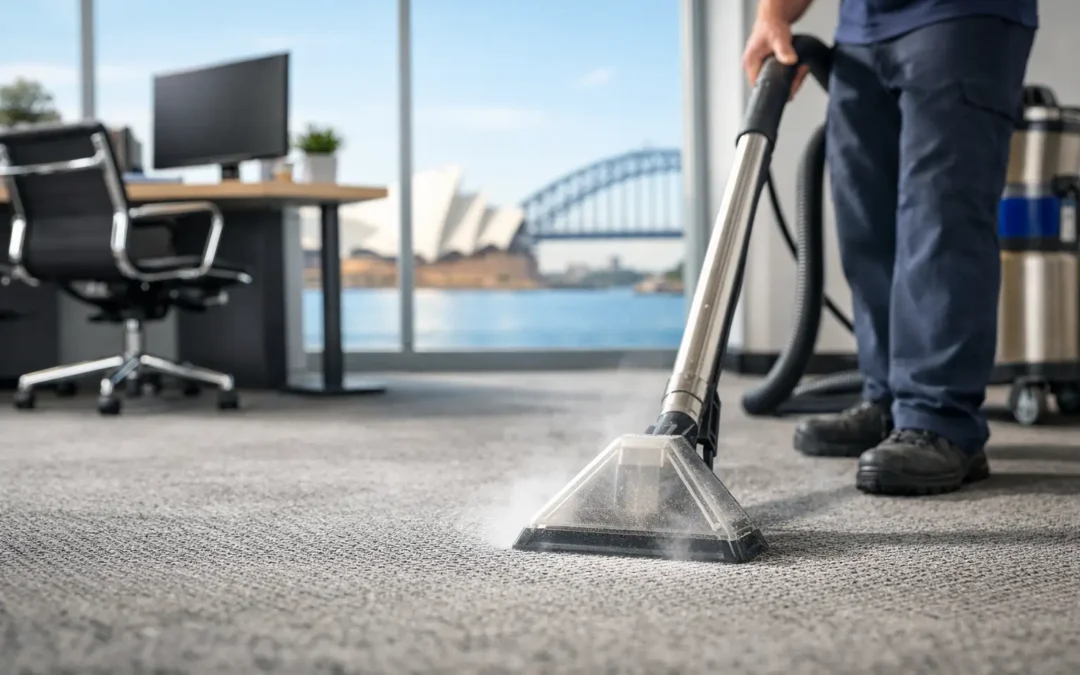
Professional carpet cleaning uses equipment and methods designed to lift deeper contamination. Hot water extraction is commonly used for commercial carpet, while low-moisture methods may suit certain carpet types or offices that need a faster return to use. The best method depends on the fibre, backing, level of soiling and drying conditions.
A rushed clean that leaves too much moisture behind can create problems of its own. A professional cleaner should inspect the carpet, select an appropriate method and plan the work around ventilation, access and drying time. For many offices, after-hours or weekend cleaning is the easiest way to minimise interruption.
Deal with spills immediately
A professional clean is not a reason to leave a fresh spill until the next scheduled visit. Coffee, tea, ink, food, mud and cosmetic products can bond with fibres as they dry. The quicker they are treated, the more likely they are to come out cleanly.
Blot the spill with a clean white cloth rather than rubbing it. Rubbing can spread the stain and damage the carpet pile. Avoid pouring large amounts of supermarket cleaner onto the area, as excess product can leave a residue that attracts more dirt or react poorly with the carpet material.
For significant spills, recurring stains or unknown substances, arrange professional spot treatment. This is especially important where the carpet is under a lease condition or forms part of a client-facing area.
Plan around leases, inspections and office changes
Office carpet cleaning is often left until a property inspection, relocation or lease handover is already approaching. That can create avoidable pressure, particularly if stains need more than one treatment or the carpet needs time to dry before furniture is moved.
For an end-of-lease clean, arrange a carpet assessment early enough to deal with traffic marks, odours and stains properly. Keep records of scheduled professional cleaning during the tenancy where possible. They demonstrate that the premises have been maintained and can assist when discussing condition requirements with a landlord or property manager.
The same principle applies after fit-outs, minor building works or repairs. Fine construction dust travels further than expected and can settle into carpet, so a post-work clean should include vacuuming and carpet treatment where needed.
Build a cleaning plan that works in practice
The best carpet schedule is one your office can maintain consistently. Start with high-frequency vacuuming in entry points and shared spaces, set a clear process for reporting spills, and book deep cleaning based on traffic levels rather than waiting for complaints.
For sites with several service needs, coordinating carpet care with routine office cleaning can reduce administration and keep standards consistent across kitchens, bathrooms, workstations and common areas. 5 Star Cleaning Group can tailor commercial carpet cleaning around your operating hours, site conditions and required presentation standards.
A clean carpet should not be something your team notices only when it has become a problem. Put a practical schedule in place now, and your office will remain more comfortable, professional and ready for the next inspection, meeting or busy Monday morning.