



If you are comparing quotes, setting site standards, or trying to fix ongoing cleaning issues, understanding commercial cleaning services meaning matters more than it sounds. It is not just a broad label for someone who empties bins and runs a vacuum through the office. In practice, commercial cleaning covers planned, professional cleaning for business, shared, retail, industrial, and managed property environments.
That distinction matters because a commercial site has different demands from a house. There are higher foot traffic areas, shared amenities, safety requirements, presentation standards, access rules, after-hours scheduling, and often multiple stakeholders involved. A cleaner working in an office tower, retail tenancy, strata complex, medical setting, or post-construction site is managing a very different job from standard domestic cleaning.
Commercial cleaning services meaning in practical terms
Commercial cleaning services meaning refers to professional cleaning delivered for workplaces, managed properties, and commercial premises rather than private homes. The scope can be routine, periodic, or one-off, depending on the site and the result required.
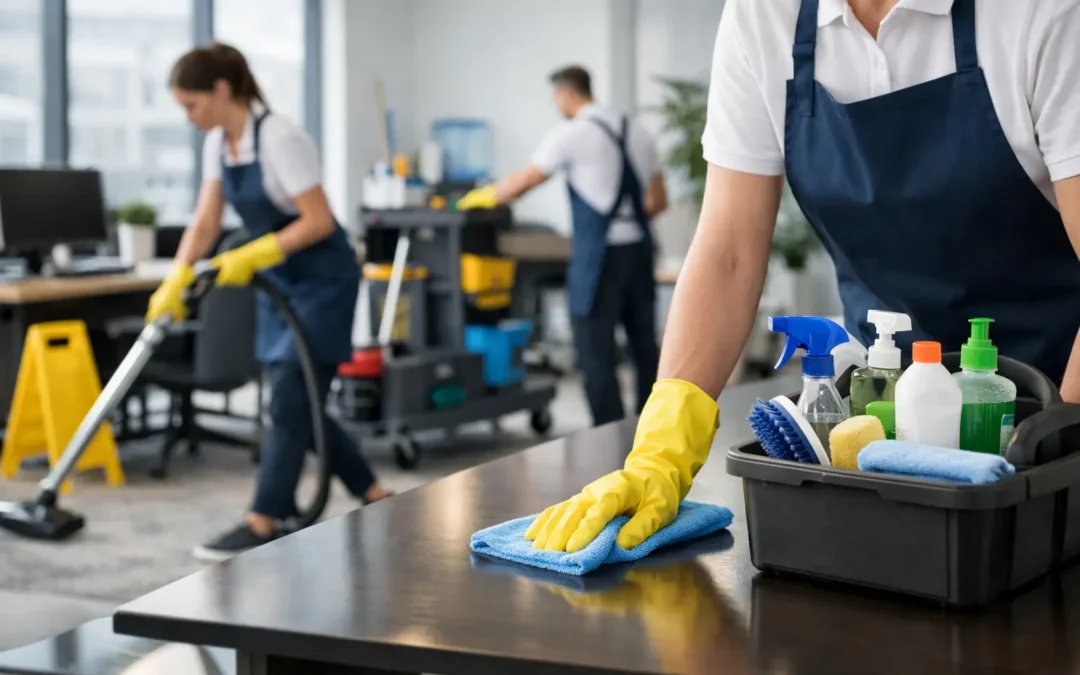
Routine work usually includes the tasks needed to keep a property presentable, hygienic, and operational. That often means vacuuming carpets, mopping hard floors, cleaning bathrooms, wiping touchpoints, emptying rubbish, cleaning kitchens or staff breakout areas, and maintaining shared spaces. In some buildings, this also extends to lifts, lobbies, stairwells, glass, and external entry points.
But the term also includes specialised work. A commercial cleaner may be engaged for builders cleaning, high-detail office cleaning, end of lease cleans, retail fit-out clean-ups, rubbish removal, pressure cleaning, floor care, or flood restoration. So when people ask what commercial cleaning means, the short answer is this: it is a professional service designed to maintain or restore non-residential spaces to the standard the site actually needs.
What is included in commercial cleaning services meaning?
The answer depends on the property type, site condition, and service frequency. That is why good providers do not treat every building the same.
For an office, the focus is usually on desks, amenities, kitchens, floors, meeting rooms, glass, and rubbish management. For a strata property, the priority may be common areas, foyers, lifts, handrails, bins, and presentation across multiple levels. In retail, appearance is critical, so cleaners need to work around trading hours and keep customer-facing areas consistently sharp. On construction sites, the work is more detailed and more demanding, with dust removal, debris clearing, final presentation work, and surface-safe cleaning after trades have finished.
This is where many buyers get caught out. Two companies may both offer commercial cleaning, but one may only handle basic maintenance while the other can manage detailed property-focused cleaning across different site conditions. The wording sounds similar, but the service level is not.
Why businesses and property managers use commercial cleaners
For most sites, cleaning is not just about appearance. It affects tenant satisfaction, staff experience, safety, compliance, and how a property is judged by visitors, customers, or incoming occupants.
A poorly cleaned office can make the whole business feel disorganised. A neglected strata entrance can trigger complaints from residents and owners. A retail shop with dusty floors or dirty glass can undermine customer confidence before any sale happens. After construction, a site cannot be handed over properly if dust, adhesive marks, packaging waste, and residue are still present.
Professional commercial cleaning helps remove that friction. It gives site managers a process, a schedule, and a standard they can rely on. That reliability is often the real value, especially when multiple contractors, tenants, or stakeholders are involved.
Commercial cleaning is not the same as domestic cleaning
This is one of the most important parts of commercial cleaning services meaning. Domestic cleaning is generally designed around a home, a family schedule, and a smaller range of surfaces and traffic patterns. Commercial cleaning is structured around operations, access windows, presentation standards, and scale.
Commercial sites often need after-hours attendance, site inductions, security procedures, safe chemical handling, and cleaners who know how to work without interrupting staff, customers, or residents. They may also require equipment beyond standard household tools, especially for larger floor areas, heavy soil build-up, or post-build cleaning.
There is also more accountability. In commercial settings, cleaning usually sits inside a service agreement, scope of works, or scheduled maintenance plan. Expectations are clearer, and so are the consequences when standards slip.
Who typically needs commercial cleaning?
The term applies to more industries than many people realise. Offices are the obvious example, but they are only one part of the market.
Property managers use commercial cleaners to maintain common areas and keep buildings tenant-ready. Strata managers rely on them to maintain presentation and reduce complaints across shared spaces. Builders need post-construction cleaning before handover. Retail operators need regular cleaning that works around customer hours. Landlords and tenants often need professional end of lease cleaning to meet handover requirements. Even businesses that only need occasional rubbish removal or flood clean-up still fall within the commercial service space if the job is tied to a business or managed property.
In Sydney, this flexibility matters because many sites do not fit neatly into one category. A mixed-use building may include retail, office, parking, and residential common areas all within the same property footprint. Working with a provider that can cover different cleaning needs under one service model can save time and reduce contractor churn.
How service scope affects pricing
One reason people search for commercial cleaning services meaning is that quotes can vary sharply. That usually comes down to scope rather than inflated pricing.
A lower quote may cover only basic cleaning with limited inclusions, minimal detail work, and infrequent visits. A more realistic quote may allow for trained staff, proper equipment, environmentally conscious products, after-hours access, consumables management, and the flexibility to respond when the site changes.
Frequency also matters. A five-day office clean, a weekly strata service, a one-off builders clean, and an urgent flood restoration job are all commercial cleaning, but they are priced differently because the labour, timing, risk, and equipment needs are different.
The practical takeaway is simple: commercial cleaning is not one fixed package. It is a category of service, and the actual value depends on how well the scope matches the site.
What to look for in a provider
If you are assessing providers, the right question is not just do they offer commercial cleaning. It is whether they can deliver the type of commercial cleaning your property requires.
Look for experience across the kind of site you manage. An office cleaner may not be the right fit for a post-construction clean. A domestic operator moving into commercial work may struggle with larger sites, access restrictions, or consistency across recurring visits. A capable provider should be able to explain what is included, how quality is checked, what equipment is used, and how they handle site-specific requirements.
Reliability is the other major factor. Decision-makers usually do not want the cheapest service if it creates follow-up work, complaints, or missed standards. They want a team that arrives as scheduled, works to scope, communicates clearly, and resolves issues without fuss.
That is why many Sydney businesses and property managers prefer an established operator with broad service coverage rather than using separate cleaners for offices, common areas, construction cleans, and end of lease work. A company such as 5 Star Cleaning Group is built around that model, which is useful when your cleaning needs shift across property types or project stages.
When the term can be misleading
Commercial cleaning sounds straightforward, but it can be used too loosely. Some providers use the phrase to attract enquiries even when their capability is quite narrow. Others list the service but outsource key jobs or only take on small, low-complexity sites.
That does not always mean they are unsuitable. For a small tenancy with simple needs, a limited scope may be enough. But for larger buildings, handover cleans, strata sites, or multi-area properties, you need to know whether the provider can handle detail, scale, and consistency.
A useful way to think about it is this: commercial cleaning is an umbrella term, not a guarantee of range or quality. The detail behind the term matters.
Why the meaning matters before you request a quote
If you understand what commercial cleaning services meaning actually covers, you are in a better position to ask the right questions and compare providers properly. You can define the outcome, avoid vague scopes, and make sure the quote reflects the standard your site needs.
That clarity saves time on both sides. It helps cleaners price accurately, and it helps you avoid paying for the wrong service or ending up with a team that is not equipped for the job. Whether you manage an office, retail premises, strata property, construction site, or vacated tenancy, the best results usually come from matching the service type to the property reality rather than choosing based on the label alone.
A clean site should never feel complicated, but the service behind it needs to be well understood. Once you know what the term really covers, it becomes much easier to choose a provider with confidence.