




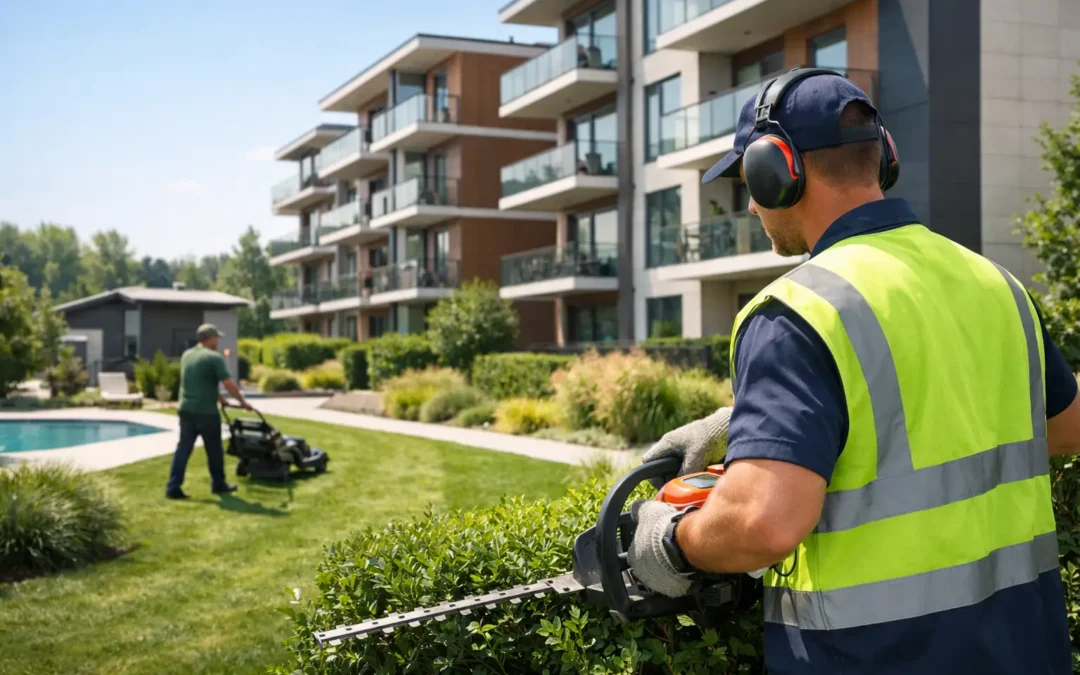
The complaints usually start small – a marked lift wall, overflowing bins, a slippery entry after rain, cobwebs building up around lights. Left alone, those minor issues quickly change how residents, owners and visitors see the whole building. That is why strata property maintenance matters. It is not just about keeping common areas presentable. It protects asset value, reduces avoidable risk and helps a strata scheme run with fewer day-to-day problems.
For strata managers and committee members, the challenge is rarely knowing that maintenance matters. The hard part is keeping standards consistent across busy sites, changing seasons, mixed resident expectations and tight budgets. In Sydney, where many strata properties carry heavy foot traffic and are exposed to everything from coastal moisture to urban grime, reactive maintenance is rarely enough. A planned, reliable approach delivers better results and usually costs less over time.
What strata property maintenance really covers
When people hear maintenance, they often think only of repairs. In strata settings, the picture is much broader. It includes the regular care that keeps common property clean, safe and functional, as well as the larger works needed to prevent deterioration.
That means day-to-day cleaning of foyers, lifts, stairwells and shared amenities. It also includes rubbish management, pressure washing, garden upkeep, spot cleaning after incidents, and periodic deep cleaning of carpets, hard floors and high-touch surfaces. Depending on the site, it may also involve post-building works clean-ups, waste removal and specialist services after leaks or flooding.
The common thread is simple. Good maintenance supports presentation, hygiene, safety and compliance all at once. If one part slips, the others usually follow. A poorly managed bin room becomes a hygiene issue. A dirty tiled entrance becomes a slip risk. Neglected common areas invite more damage because residents assume standards are already low.
Why standards slip in strata buildings
Most strata schemes do not fail because no one cares. Standards slip because responsibility is spread across managers, committees, contractors and residents. Without a clear scope and reliable service schedule, small tasks are missed until they become visible problems.
There is also the issue of inconsistency. A building might look fine after a fresh clean, then drop off sharply when the contractor changes staff, rushes the job or works without proper supervision. For property managers, this creates the worst kind of problem – repeated complaints about issues that should have been straightforward to prevent.
Budget pressure plays a part too. Some schemes focus only on the cheapest quote, then find themselves paying more through call-backs, poor workmanship and faster wear on shared surfaces. In strata property maintenance, price matters, but value matters more. A cheaper service that misses details or damages finishes is not a saving.
The areas that need the most attention
Every building is different, but a few common property zones nearly always drive resident feedback. Entry points set expectations immediately. If glass is smudged, mats are soiled or the foyer smells stale, people assume the rest of the building is being neglected too.
Lifts and stairwells are next. They take constant use and show marks quickly, especially in larger residential complexes. Bin rooms are another high-risk area because odour, residue and spills can escalate fast in warm weather. Car parks also deserve more attention than they often get. Oil stains, built-up dust and rubbish in corners create a poor impression and can become a genuine safety concern.
Outdoor spaces bring their own demands. Paths, driveways, pool surrounds and shared courtyards are exposed to weather, leaf litter and mould. In Sydney conditions, these surfaces can become slippery well before the issue is obvious from a distance. Routine inspection and cleaning make a real difference here.
Cleaning is not a side issue in strata maintenance
There is a tendency to separate cleaning from maintenance, as if one is cosmetic and the other is operational. In practice, cleaning is one of the most visible and cost-effective parts of a maintenance plan. It helps identify defects early, protects finishes and reduces the speed at which common areas deteriorate.
A well-maintained building does not happen through occasional intensive work alone. It depends on regular, competent cleaning carried out by people who understand different surfaces, traffic patterns and site access needs. The right frequency also matters. A small boutique block may need a lighter schedule than a high-density complex near a busy road, but both need consistency.
This is where site-specific planning matters. The best result comes from matching the service level to the actual building, not forcing every property into the same checklist. Some sites need more pressure cleaning. Others need closer attention to lift detailing, glass, rubbish removal or touchpoint sanitation. It depends on occupancy, layout and how the building is used.
Preventive maintenance saves money, but only if it is practical
Preventive maintenance is often spoken about as the ideal, and for good reason. Dealing with build-up, staining or damage early is usually cheaper than restoring a heavily neglected area later. The same applies to moisture issues, mould growth and flooring wear.
Still, there is a practical balance to strike. Over-servicing a building is not efficient, especially for smaller schemes watching costs closely. The goal is not to throw every possible service at a property. It is to identify where neglect creates the highest risk or the highest downstream cost.
For example, routine pressure washing of external walkways may prevent slips and preserve presentation. Scheduled carpet cleaning in common areas can extend carpet life and reduce premature replacement. Prompt rubbish removal after move-ins, renovations or storm events can stop a property looking unmanaged. The value comes from choosing the right recurring tasks, then delivering them on time.
Choosing the right provider for strata property maintenance
For strata managers, reliability is usually the deciding factor. A contractor can promise high standards, but if they miss visits, turn up without the right equipment or need constant follow-up, they add work instead of removing it.
A good provider should be clear about scope, frequency and reporting. They should understand how to work in occupied buildings with minimal disruption and know that presentation matters as much as technical completion. They should also be properly equipped for different site conditions rather than treating every building the same.
Experience across multiple property types is valuable here. A team that handles commercial sites, strata complexes, builders cleans and rubbish removal can often respond more effectively when a site needs more than basic routine cleaning. That flexibility helps when there is an unexpected mess, a time-sensitive inspection or a one-off issue that sits outside the standard schedule.
Sydney strata managers also need providers who understand local conditions. Coastal air, heavy rain, construction dust and dense traffic all affect how quickly common areas lose their finish. Local knowledge leads to more realistic maintenance schedules and better recommendations.
What a smarter maintenance plan looks like
The strongest maintenance plans are straightforward. They set out what gets done, how often, and what happens if conditions change. They are not padded with unnecessary tasks, and they are not so vague that standards become subjective.
In practice, that often means combining regular cleaning with scheduled deeper works and responsive support when incidents occur. High-traffic internal areas may need frequent attention, while external hard surfaces may be serviced seasonally or after weather events. Bin rooms and shared bathrooms need stricter hygiene standards than lower-use areas. Car parks and storerooms may not need daily attention, but they should not be ignored until complaints build up.
Communication matters just as much as the schedule. If managers and committees know what is included and how issues are escalated, there is less confusion and less friction. A no-fuss service model works best in strata because there are already enough moving parts. The contractor should simplify operations, not complicate them.
For many buildings, this is where an experienced provider such as 5 Star Cleaning Group can make a real difference – not by overpromising, but by delivering consistent cleaning, flexible support and practical property-focused service that fits the site.
The cost of getting it wrong
Poor maintenance has a compounding effect. Residents notice it first, then owners, then prospective tenants or buyers. Complaints increase, committee pressure rises and managers spend more time chasing solutions for issues that should have been routine.
There is also the reputational cost. A clean, well-kept building feels safer, more valuable and better managed. A neglected one creates doubt, even when the underlying structure is sound. In competitive property markets, those perceptions matter.
The operational cost is just as real. Stains set in, surfaces wear faster, odours linger and minor hazards become bigger liabilities. What could have been handled through regular attention turns into a larger job with a larger invoice.
Strata property maintenance works best when it is steady, practical and matched to the building in front of you. If your common areas are only getting attention once complaints arrive, the schedule is already too late. The better move is a service plan that keeps the property clean, compliant and easy to manage before small issues get the chance to grow.