



A carpet can make an office look professional or make the whole site feel tired before a client has even sat down. In busy workplaces, commercial carpet cleaning is not just about appearance. It affects indoor air quality, wear rates, odour control and the way staff, tenants and visitors judge the space within seconds.
For property managers, office administrators and commercial operators, the real issue is rarely whether carpets need cleaning. It is when to do it, how often to do it, and whether the job will be done properly without disrupting business. That is where experience matters. A quick surface clean might improve the look for a few days, but it will not remove deep soil, stains, trapped moisture or the fine dust that builds up over time.
Why commercial carpet cleaning matters more than most sites realise
Carpet in a commercial setting takes a different level of punishment from carpet in a home. Foot traffic is heavier, spills are more frequent, and soil gets tracked in daily from entry points, lifts, loading areas and common spaces. In retail, the issue is constant movement and presentation. In offices, it is coffee spills, chair track marks and long-term buildup. In strata and shared buildings, it is the mix of traffic patterns, weather exposure and inconsistent day-to-day upkeep.
If carpets are left too long between cleans, the damage becomes harder to reverse. Grit and dry soil act like sandpaper under shoes and furniture. That wears fibres down faster and can leave traffic lanes looking flat and grey even after cleaning. Stains also set deeper over time, particularly in areas where spills were wiped rather than treated properly.
There is also a hygiene and maintenance issue. Carpets hold dust, allergens and odours more easily than hard flooring. In enclosed commercial environments, that can affect how fresh the space feels, especially in meeting rooms, receptions, shared corridors and tenanted areas. A regular cleaning schedule helps control all of that before it becomes a bigger problem.
Not every carpet needs the same cleaning method
One of the most common mistakes in commercial carpet cleaning is treating every site the same. The right method depends on carpet type, site usage, soiling level, stain profile and how quickly the area needs to be back in service.
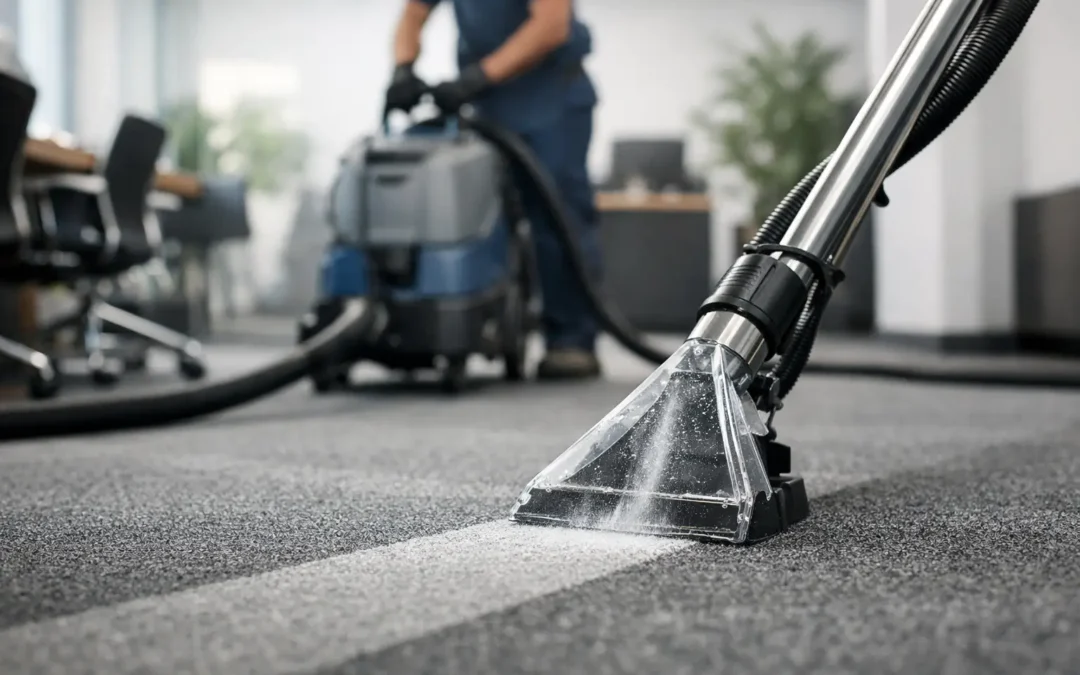
Hot water extraction is often the best option when deeper cleaning is needed. It is effective for removing embedded soil, treating heavier traffic lanes and improving overall freshness. This suits many offices, end of lease commercial spaces and sites where appearance has noticeably dropped off. The trade-off is drying time. On a well-managed job, this can still be planned around business hours, but it is not always the best fit for every high-traffic environment.
Low-moisture methods can work well where faster turnaround is a priority. These are often suitable for routine maintenance cleans in offices, strata common areas and retail spaces that cannot afford extended downtime. The result can be very strong when the carpet is maintained regularly, though severely soiled areas may still need a deeper restorative clean.
Spot treatment is another area where technique matters. Some stains respond well to targeted treatment. Others, particularly older stains, dye-based spills or damage caused by incorrect previous cleaning, may improve without disappearing completely. A professional operator should be honest about that rather than overpromise.
Timing matters as much as the clean itself
A good result is not only about machines and chemicals. It is also about scheduling. In commercial settings, poor timing creates avoidable problems – wet walkways, interrupted staff, noisy work during trading hours and spaces that are not ready when needed.
That is why many businesses benefit from cleaning outside peak use times. Early morning, evenings, weekends or staged area-by-area work can reduce disruption and keep the site operational. For larger buildings and managed properties, flexibility is often just as important as the cleaning result itself.
The best schedule usually depends on use, not guesswork. A small office with limited foot traffic may only need periodic deep cleaning with spot maintenance in between. A retail site, medical reception, strata foyer or heavily used corporate floor may need a more frequent program to protect presentation and extend carpet life. Entry points and common walkways almost always need more attention than private offices or low-use rooms.
What decision-makers should expect from a professional service
Commercial clients do not need vague promises. They need a provider that turns up on time, assesses the site properly and delivers a consistent standard. That starts with a practical site review.
A proper assessment should look at fibre type, wear patterns, problem areas, stain history and access requirements. It should also consider any site-specific constraints such as after-hours access, lift bookings, tenant communication, security procedures or the need to work around other trades. These details make a major difference in commercial environments.
You should also expect safe, appropriate products and equipment. Environmentally conscious products matter, but so does choosing solutions that are suitable for the carpet and the site conditions. Overwetting, harsh chemicals and poor extraction can create new issues instead of solving the old ones.
Just as important is a realistic scope. Some carpets need a maintenance clean. Others need restoration work. Some stains can be treated successfully, while worn traffic lanes may be a condition issue rather than a cleaning issue. Straight answers save time and help clients make better maintenance decisions.
Commercial carpet cleaning and asset protection
Replacing carpet in a commercial property is expensive. It is not only the material cost. There is disruption, installation coordination, possible tenancy issues and the general impact on presentation while works are underway. Regular cleaning helps protect that investment.
The value is clearest in managed portfolios and high-use buildings. When carpets are maintained properly, they hold their appearance for longer, respond better to spot treatment and stay serviceable well beyond the point where neglected carpet starts to look beyond recovery. For landlords, strata managers and facilities teams, that can mean fewer complaints and lower lifecycle costs.
This is also relevant at the end of lease stage. Carpet condition is one of the first things noticed during inspections. A professional clean will not fix burns, tears or permanent damage, but it can materially improve presentation, remove stains and odours, and help bring the property up to handover standard.
The Sydney factor: traffic, weather and turnaround
Sydney sites come with their own pressures. Wet weather brings in more soil and moisture. CBD offices and retail spaces deal with dense foot traffic. Strata buildings often need common areas cleaned without inconveniencing residents. Construction-adjacent and recently completed properties can carry fine dust that settles into carpet quickly if not addressed properly.
That means commercial carpet cleaning in Sydney often needs to be more responsive than clients expect. Waiting until carpets look obviously dirty is usually too late. By then, soil has often worked well below the surface. A proactive maintenance plan generally delivers better value than occasional reactive cleaning.
For businesses managing multiple cleaning needs, it also helps to work with a provider that understands broader site care. A company such as 5 Star Cleaning Group can coordinate carpet cleaning as part of a wider commercial or property cleaning scope, which is often more efficient than juggling separate contractors for every issue on site.
How to know it is time to book a clean
Sometimes the signs are obvious. Stains are visible, odours linger, and entry areas look darker than the rest of the floor. Other times, the clues are more gradual. Carpet starts looking flat. The space feels less fresh even after routine vacuuming. Meeting rooms, hallways or reception areas no longer match the professional standard the business wants to present.
Routine vacuuming is essential, but it only handles surface debris. Once dirt is worked into the pile, a professional clean is the only way to remove it properly. If it has been many months since the last deep clean, or if the carpet is in a high-traffic environment, delaying it usually makes the next job harder and more expensive.
The most practical approach is to treat carpet cleaning as planned maintenance rather than an emergency response. That gives you cleaner presentation, fewer complaints, better hygiene and a longer life from the flooring you have already paid for.
A well-maintained carpet does not call attention to itself – and that is the point. It supports a cleaner, more professional space without adding problems elsewhere. When the work is done properly, your site looks sharper, feels fresher and stays ready for the people who use it every day.
Trackbacks/Pingbacks